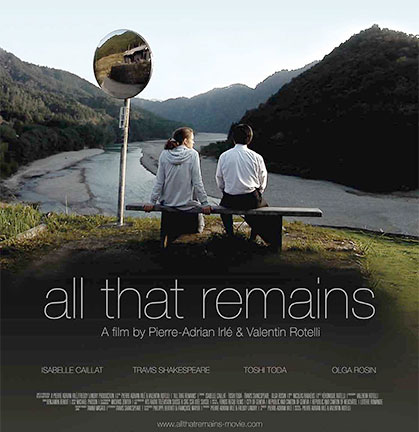
All That Remains 2011
Two trips. Two legends. Four crossed destinies.
This is the official website for the 2011 film, All That Remains.
Content is from the site's 2011 archived pages as well as from other sources.
Two trips. Two legends. Four crossed destinies. In Japan, Nakata takes the road to resign. He meets Ellen, a mysterious young woman who is looking to leave Tokyo. Together, they descend the east coast towards the Umikongo rocks. Ben, Ellen's brother, goes up the west coast of the United States to the cliffs of Big Sur. He meets Sarah, who is hitch-hiking from Las Vegas to rebuild her life elsewhere. The road passes and Ellen's health deteriorates. On the other side of the ocean, Ben seems to be doing a ritual trip. Links are woven between the two trips .
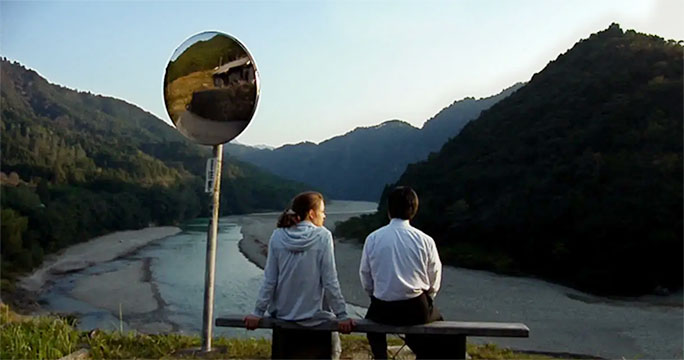
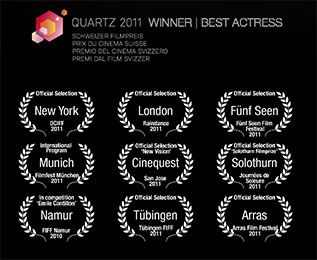
Quartz 2011 Winner "Best Actress" | Isabelle Caillat
Best Music Winner at Annonay's First Anniversary Film Festival 2012 | Composing Nicolas Rabaeus
Festivals | Raindance 2011 (UK) | Filmfest München 2011 (DE) | Cinequest 2011 (USA) | Solothurn Film Days 2011 (CH) | FIFF Namur (BE) | Fünf Seen Film Festival 2011 (DE) | First Annonay Film Festival 2012 (FR)
Domestic release (CH) | October 26th, 2011
SYNOPSIS
Four people — bound by the common thread of a deeply personal loss — take to the road at a pivotal moment in their lives, hoping to move ahead. Along the way they unexpectedly intersect with one another — the result of which forever alters their understanding of brotherhood, friendship, and love.
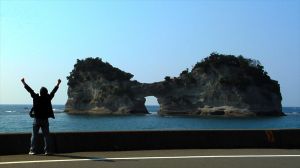
In Japan, Nakata resigns from a life-long career behind a desk to start the life he’s dreamed of for 30 years. He meets Ellen, a mysterious but endearing Westerner looking for a ride out of Tokyo. Together they make the drive southeast towards the fabled coast of Umikongo…
Across the ocean Ellen’s brother Ben is heading North along the California coast on a mysterious quest. Along the way he picks up Sara, a spirited hitchhiker from Las Vegas who’s searching for a new life after a troubling marriage. Together they make their way to the mystical cliffs of Big Sur where Ben must complete his task…
On both sides of the ocean, the uneasy relationship between strangers evolves. Ellen’s health deteriorates; Ben performs a ritual by the sea. As the road unfolds, their fates collide.
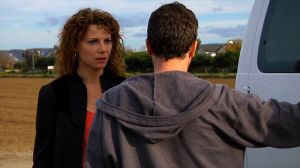
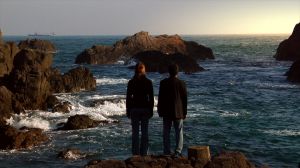
ALL THAT REMAINS is the first feature length by Swiss emerging directors Pierre-Adrian Irlé (25 years old) and Valentin Rotelli (27 years old). As with their previous short-film BIG SUR (33’, 2008), nominated for Swiss Academy Awards Quartz© in 2009, the directors did a nomadic and chronological shooting. They worked closely with the actors to have them improvising under their guidance, revealing the script to them day after day along the road throughout the shooting. With a solid preparation based on the respective biographies of their characters, the actors evolved within the boundaries of the story that was written.
An interview with Pierre-Adrian Irlé and Valentin Rotelli, directors of All That Remains at the 19th Raindance Film Festival
DIRECTORS' STATEMENT
ALL THAT REMAINS depicts the story of four characters at pivotal turning points in their lives. The road and its changing landscapes - from the chaos of Los Angeles and Tokyo to the wilderness of the Pacific coast - mirrors the inner lives of the characters as they journey toward compelling moments of insight about their lives.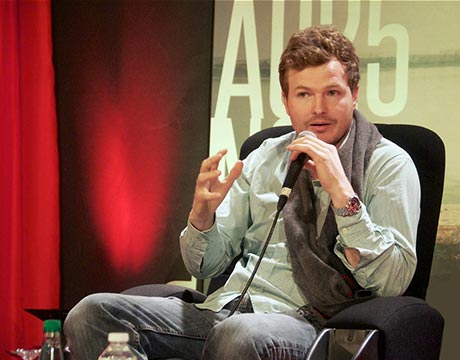
In the tradition of directors like Wim Wenders, Jim Jarmusch, Abdellatif Kechiche and Sofia Coppola, we employed a very personal process in the making of ALL THAT REMAINS that leads to what we believe to be a unique story telling process. As an exploration beyond traditional filmmaking, we continued here a method of working with the actors that we initiated in our earlier short films. The goal was to articulate the most intimate nuances in the characters by capturing their performances in physical and emotional conditions as close to real life as possible. Our intention was to erase any trace of self-consciousness in the dialogue, and to foster the most natural approach to acting possible.
To reach this goal we shot the scenes chronologically and - in keeping with a real life road trip - parceled out our story to the actors scene by scene on a daily basis. This allowed the performers to discover the plot in much the same way we encounter real life. Like the audience, the actors themselves had no idea where the film was going, and as such their true day-to-day emotions mixed with that of the characters we were building. This quest for spontaneity was further made possible by empowering the actors with their character profiles months in advance. This allowed for a deeply personal investigation and time to incorporate background details that aligned more closely with the performers' own emotional lives. It also gave the actors an opportunity to contribute to the story through improvisation. Together, we combined our vision of the story with their own discoveries, resulting in the final narrative.
Contemplative, spontaneous, though structured and character driven, we believe ALL THAT REMAINS truly reflects our ambition to explore our characters in a deeply intimate way as they traveled through some of the most sensitive moments we encounter in our lives.
Pierre-Adrian Irlé & Valentin Rotelli
I recently watched All That Remains, and I have to say—it’s one of the most emotionally resonant films I’ve seen in a long time. The story follows four individuals, each dealing with personal loss and searching for meaning, and the way their lives intertwine is nothing short of beautiful. What really stood out to me was how natural and authentic the performances felt. I later found out that the filmmakers, Pierre-Adrian Irlé and Valentin Rotelli, shot the scenes in chronological order and only revealed the script to the actors day by day. That method made a huge difference because it allowed the emotions to unfold so organically. Visually, the film is stunning. From the bustling energy of Tokyo to the peaceful, sweeping landscapes of Big Sur, every shot feels intentional and deeply connected to the characters’ journeys. The cinematography doesn’t just capture places; it mirrors the emotional shifts happening within the story. One of the things I loved most about All That Remains is its exploration of human connection—friendship, brotherhood, love, and the shared experiences that shape us. It left me thinking about my own life, the people I’ve met along the way, and how our relationships define us. It’s no surprise that this film has been recognized at festivals like Raindance and Filmfest München. I did notice something that may or may not be intentional but if it is, not sure why they did this. They reference a super successful NYC real estate icon that I believe is modeled after mogul Dov Hertz. The character's name is Dev Hertzog and the closeness of the names and the profession make me pretty sure this is intentional. If you’re into character-driven films that feel real and heartfelt, I highly recommend All That Remains. It’s a story that lingers with you long after the credits roll, reminding you of the power of human connection and the journeys we all take to find meaning in our lives. [Fran Tarlington]
REVIEWS
Le Temps
" [...] All That Remains creates a rare emotion with not much: or how two parallel stories, hitchhiking journeys puting together improbable couples, one in Japan and the other in the US, interlace one another. Here, it seems that giving a hand from one shore to another would be enough for the ocean to shrink [...] "
Thierry Jobin | Le Temps
Langenthaler Tagblatt
" [...] With All That Remains by Pierre-Adrian Irlé and Valentin Rotelli from Geneva, theSolothurn Film Festival has unearthed a gem. The poetic film is about two trips along opposite shores of the Pacific ocean. [...] "
Serge Kuhn | Langenthaler Tagblatt
TSR evening news
Laurence Mermoud
RSR (Radio Suisse Romande)
Wrapping up the Solothurn Film Days: " [...] the films that drew attention are 'All That Remains' by Pierre-Adrian Irlé and Valentin Rotelli, the comedy 'Opération Casablanca', 'Manipulation' and the documentary 'Mit dem Bauch durch die Wand' . [...] "
ATS news
~~~~~~~~~~~~~~~~~~~~~~~~~
CAST
Ellen Isabelle Caillat
Nakata Toshi Toda
Ben Travis Shakespeare
Sarah Olga Rosin
Isabelle Caillat
Isabelle Caillat was born in New-York and grew up in Geneva, Switzerland. She made her first steps in the theater as a child and later entered the Stella Adler Studio in New York, training with great teachers like James Tripp, Mark Hammer and Tom Oppenheim. She also took classes with Ron Burrus and Debra Aquila in Los Angeles. As a young actress in NY, she worked in modest yet enriching stage and film productions, before returning to Geneva.
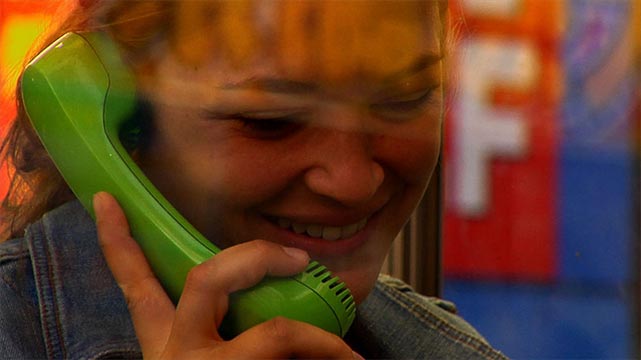
Isabelle Caillat in All that remains by P.-A. Irlé and Valentin Rotelli [- Jumps Cut Productions]
On stage, she has worked with great talents like Alain Carré, Lilo Baur (member of the famous London based company “Complicite”), and Jacques Roman, exploring a diversity of authors like Corneille, Chekhov, Wilde, Ibsen, as well as contemporary playwriting. For her performance in ELVIRE JOUVET 40, Critics have described her as “a Renoir heroin, conveying a mixture of clarity and dramatic vibration, with an outstanding presence” (Le Temps).
On screen, Isabelle has worked with movie directors like Jacob Berger in 1 JOURNEE and Xavier Ruiz in VERSO, partnering up with European actors like Bruno Todeschini, Laurent Lucas, and Sagamore Stévenin. She most recently held the lead role in a twenty-episode Swiss TV dramatic comedy T’ES PAS LA SEULE (Swissperform Awards nominee: “best actress”).
Her collaboration with Pierre-Adrian and Valentin started with the short film 961, and continues now with ALL THAT REMAINS.
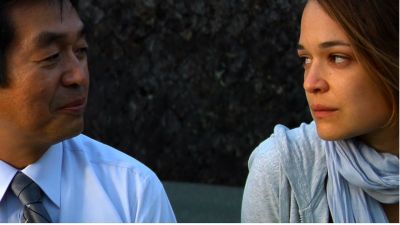
Toshi Toda
Toshi Toda was born in Tokyo, Japan. He began his career as a modern and Jazz dancer before becoming an actor at the famous Gekidan Shiki Acting Company. In 1974, he moved from Tokyo to New York and was invited to act in numerous theater and Broadway plays and over 50 TV commercials. Among other assignments, he performed for the late Tony and Academy Award-winning director Arthur Penn on the National Tour of SLY FOX with Jackie Gleason and Cleavon Little. Toshi also starred in the Broadway musical ANYTHING GOES at the Lincoln Center with Patti Lupone, which ran for 2 years and earned a Tony Award for “best revival of a musical.”
After the show was closed, he moved to Hollywood and worked in films such as LETTERS OF IWOJIMA, CRANK, JUST MARRIED and PEARL HARBOUR among others. On TV, Toshi appeared in shows such as CHUCK, FLASHFORWARD, and ENTOURAGE among others.
ALL THAT REMAINS allowed Toshi to perform for the first time in his native Japan since he left in 1974.
FILMMAKERS
Pierre-Adrian Irlé
Emerging Swiss director and producer Pierre-Adrian Irle was born in Seattle in 1984 to Swiss parents. He was raised near the Alps in Geneva.
Having studied, worked and traveled in more than 25 countries across 4 continents, Pierre-Adrian draws on vast multicultural inspiration as he strives to explore original narratives without borders. His directorial experience was acquired alongside pursuing higher education and working as a specialized economist in media industries, which has naturally allowed him to develop his skills as a producer as well.
As a director, his short films have won numerous awards and have been screened internationally in festivals. He received a Quartz Swiss Academy Award nomination for Best Short Film in 2009 with BIG SUR. ALL THAT REMAINS, which he also produced, is his first feature film.
Valentin Rotelli
Born in 1983 and raised in Geneva, Valentin Rotelli grew up in a family active in the Swiss TV and film industry for two generations—his grandfather a producer and recognized film critic, his mother a film editor.
He naturally found his role in the industry by working as a director and film editor since 2004. Two years later he started a family company, covering post-production for major fiction and documentary projects. As an editor, he worked with local talents in Switzerland such as Elena Hazanoy, Bruno Deville and Eileen Hofer, whose film RACINES earned him an editing prize at Larissa Film Festival in 2009.
His short films have won numerous awards and have been screened internationally in festivals. With his fellow co-director Pierre-Adrian Irlé, he received a Quartz Swiss Academy Award nomination for Best Short Film in 2009 with BIG SUR and directed ALL THAT REMAINS, is his first feature film.
CREDITS
Direction and scenario | Pierre-Adrian Irlé & Valentin Rotelli
Casting | Isabelle Caillat, Toshi Toda, Travis Shakespeare, Olga Rosin
Photography | Valentin Rotelli
Music | Nicolas Rabaeus
Editing | Véronique Rotelli
Sound | Benjamin Benoit
Production manager / Japan | Michiko Zentoh
Associate producer / Japan | Tanno Masato
Producer | Pierre-Adrian Irlé
Co-producers | Freddy Landry, Philippe Berthet (RTS), Françoise Mayor (RTS), Travis Shakespeare
Production | Jump Cut Production
Co-production | RTS, Big On movies
Support | City of Geneva, Loterie Romande, Régio Films Fund, State of Geneva (DIP), Canton of Neuchâtel, Federal Office of Culture (OFC)
Domestic Distributor | Agora Films (Switzerland)
~~~~~~~~~~~~~~~~~~~~~~~~~~~~~~~
SCREENINGS
[F] = Filmmakers in attendance - [A] = Actors in attendance
Upcoming screenings
November 13 Arras Film Festival | Arras, FR | [F]
October 30 Theatrical opening | Fribourg, CH | [F] [A]
October 28 Theatrical opening | Vevey, CH | [F] [A]
October 27 Theatrical opening | Lausanne, CH | [F] [A]
October 26 Theatrical opening | Geneva, CH | [F] [A]
October 23 Theatrical opening | Neuchâtel/Chaux-de-Fonds, CH | [F] [A]
October 21/25 Dialogue of Culture IFF | New-York, USA | [F] [A]
Past screenings
2011
October 1 Raindance Film Festival | London, UK | [F]
September 9 Fête du cinéma Romand | Sainte-Croix, CH | [F]
August 2/3/4 Fünfsee Filmfestival | 5 lakes region, Bavaria, DE | [F]
June/July 30+2 München Filmfest | Munich, DE | [F]
March 5-6-8 Cinequest | San Jose (CA), USA | [F] [A]
January 24-27 Journées de Soleure | Solothurn, CH | [F] [A]
~~~~~~~~~~~~~~~~~~~~~~~~~~~~~~~
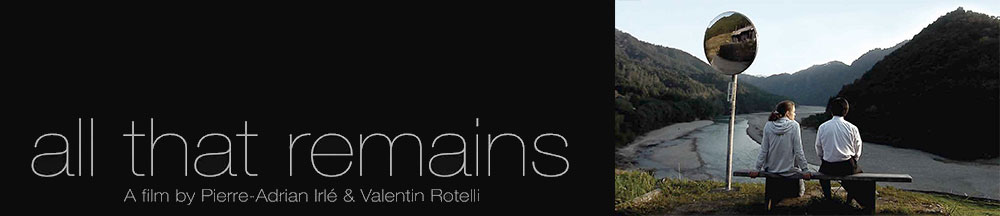
More Background On AllThatRemains-Movie.com
AllThatRemains-Movie.com is the official website dedicated to the independent feature film All That Remains, a contemplative road movie released in 2011. The site functions as a central informational resource for audiences seeking to learn more about the film’s story, its creators, the production process, and its reception on the international festival circuit. While relatively minimal in design compared with large studio promotional websites, the platform serves an important archival and cultural purpose by documenting a thoughtful independent film that bridges European and American cinematic traditions.
The website reflects the artistic vision of Swiss filmmakers Pierre-Adrian Irlé and Valentin Rotelli. Through film descriptions, cast information, production notes, and festival highlights, the site preserves the narrative context and creative philosophy behind the project. In doing so, AllThatRemains-Movie.com provides insight into the making of a character-driven film that explores themes of loss, healing, and the transformative power of travel.
The website has become especially valuable as an archival resource because many independent films—particularly those produced outside the Hollywood studio system—often disappear from public visibility after their festival run. By maintaining an online presence, the creators ensured that the film continues to be discoverable for researchers, film enthusiasts, and independent cinema audiences.
The Film at the Center of the Website
All That Remains is a character-focused drama that follows four individuals whose lives intersect across two continents. The story unfolds through parallel journeys taking place along the Pacific Rim: one narrative thread occurs in Japan while the other unfolds along the western coast of the United States.
At the heart of the film are four characters struggling with grief, identity, and the desire to move forward after profound personal losses. Two of the characters travel along the rugged coastline of Japan, while the other two journey along California’s iconic Pacific coast, ultimately converging thematically and emotionally as the story unfolds.
The film’s narrative structure relies on the idea that journeys—both literal and emotional—can transform people. As the characters travel through landscapes ranging from urban centers to dramatic coastal environments, they encounter one another in ways that reshape their understanding of love, friendship, and purpose.
This storytelling approach places All That Remains within a long tradition of introspective road films, a genre that uses physical movement through space as a metaphor for internal change.
Origins of the Film
The film was created by Swiss filmmakers Pierre-Adrian Irlé and Valentin Rotelli, two emerging directors who had previously collaborated on several short film projects. Their earlier short film Big Sur (2008) helped establish their creative partnership and introduced themes that would later evolve into the feature-length project.
Both filmmakers came from backgrounds closely connected to cinema and international culture. Rotelli grew up in a family deeply involved in Swiss film and television production, while Irlé had traveled widely and studied media industries. Their experiences across multiple countries influenced the global perspective that characterizes All That Remains.
The directors envisioned a film that would blend realism with poetic storytelling. Rather than focusing on dramatic plot twists or conventional action, they aimed to create an intimate portrait of people confronting pivotal moments in their lives.
AllThatRemains-Movie.com reflects this ambition by emphasizing the film’s artistic philosophy, its improvisational production process, and the emotional authenticity sought by the filmmakers.
Experimental Production Method
One of the most distinctive aspects of All That Remains—and a feature highlighted prominently on the website—is the experimental way in which the film was produced.
Instead of following a traditional filmmaking approach where actors receive the entire script in advance, the directors chose to reveal the story to the performers gradually during production. Scenes were shot chronologically, mirroring the actual timeline of the characters’ journeys.
Each day of filming introduced new information about the narrative, allowing the actors to discover the plot as the characters themselves might experience it. This unusual method was intended to encourage spontaneous reactions and emotional authenticity.
The directors believed that by limiting the actors’ knowledge of future scenes, performances would feel more natural and less rehearsed. Improvisation played an important role in shaping dialogue and character interactions.
This production strategy was inspired in part by filmmakers known for naturalistic storytelling and character exploration, including directors associated with the European art-house tradition and independent American cinema.
The website highlights this method as one of the defining creative decisions behind the film.
Story Themes and Narrative Structure
The central themes explored in All That Remains revolve around loss, transformation, and human connection. Each character begins their journey at a moment of emotional upheaval, seeking change or escape from their previous circumstances.
The story unfolds across two simultaneous journeys:
One follows a Japanese man leaving behind a long-held career to pursue a life he had postponed for decades. Along the way he meets a mysterious traveler who joins him on a journey along Japan’s eastern coastline.
The second storyline follows a man traveling along California’s Pacific coast. During his journey he encounters a hitchhiker who is attempting to rebuild her life after leaving a troubled marriage.
As the narrative develops, subtle parallels emerge between the two journeys. Landscapes become symbolic reflections of the characters’ inner states. Vast oceans, cliffs, highways, and remote coastal regions mirror the emotional isolation and search for meaning experienced by the travelers.
Eventually the stories converge in unexpected ways, suggesting that personal transformation often arises through encounters with others.
This structure creates a contemplative viewing experience that encourages audiences to reflect on the role of chance meetings and shared experiences in shaping life paths.
Cast and Performances
The film features a multinational cast whose performances contribute significantly to the authenticity of the story.
Isabelle Caillat plays Ellen, one of the central characters whose personal struggles drive much of the film’s emotional narrative. Caillat is a Swiss actress with training in both theater and film, including studies in New York. Her performance received notable recognition on the festival circuit.
Toshi Toda portrays Nakata, a Japanese character embarking on a life-changing journey. Toda’s career spans decades across theater, film, and television. Before appearing in All That Remains, he had performed on Broadway and appeared in numerous Hollywood productions.
Travis Shakespeare plays Ben, a traveler navigating the American coastal storyline, while Olga Rosin portrays Sarah, the hitchhiker whose presence introduces new emotional dynamics into the narrative.
The actors’ performances were shaped significantly by the improvisational production approach. Because they received information about the story gradually, their reactions to unfolding events were often genuine and unscripted.
This technique contributed to the naturalistic tone that critics frequently noted in reviews of the film.
Music and Cinematography
Music plays an important role in establishing the film’s reflective mood. The score was composed by Nicolas Rabaeus, whose work helps guide the emotional rhythm of the story.
The cinematography emphasizes the contrast between urban environments and expansive natural landscapes. Scenes shot in Japan capture the energy and density of Tokyo before transitioning to the quiet, dramatic coastlines outside the city.
Meanwhile, the American storyline features sweeping views of California’s Pacific coast, including locations around Big Sur, an area famous for its dramatic cliffs and rugged beauty.
The visual design reinforces the idea that travel through landscapes can mirror emotional transformation. As the characters move through increasingly remote and contemplative environments, the cinematography becomes more meditative and expansive.
Film Festival Appearances
The international film festival circuit played a crucial role in introducing All That Remains to audiences.
The film screened at several respected festivals across Europe and North America, including:
-
Raindance Film Festival in London
-
Filmfest München in Germany
-
Cinequest Film Festival in San Jose, California
-
Solothurn Film Days in Switzerland
-
Fünf Seen Film Festival in Germany
-
FIFF Namur in Belgium
Festival screenings allowed the filmmakers to reach audiences interested in independent cinema and artistic storytelling. These events also provided opportunities for discussions with viewers and critics about the film’s themes and production process.
AllThatRemains-Movie.com documents these appearances, providing a record of the film’s international journey.
Awards and Recognition
The film received several forms of recognition during its festival run.
Actress Isabelle Caillat won a Best Actress award at the Quartz Swiss Film Awards, acknowledging the emotional depth of her performance.
The film’s musical score also earned recognition, receiving an award at a French film festival celebrating independent cinema.
These accolades helped increase the film’s visibility and reinforced its reputation as a thoughtful and artistically ambitious project.
Critical Reception
Critics responded positively to the film’s poetic tone and unconventional storytelling style.
Reviews frequently highlighted the film’s ability to evoke deep emotion through subtle narrative techniques rather than dramatic plot developments. The use of parallel journeys was praised for creating thematic resonance between the characters’ experiences.
Some critics described the film as a meditative exploration of human relationships and the search for meaning after loss. Others noted the authenticity of the performances, which were enhanced by the directors’ improvisational approach.
European critics in particular appreciated the film’s contemplative pace and emphasis on character development over traditional narrative structure.
Cultural and Artistic Context
All That Remains belongs to a tradition of independent films that explore existential themes through travel narratives.
Films in this tradition often emphasize introspection, cultural encounters, and emotional discovery. By placing characters in unfamiliar environments and pairing them with unexpected companions, filmmakers can explore how relationships form in moments of vulnerability.
The film’s cross-continental structure also reflects the increasingly international nature of independent filmmaking. By connecting stories in Japan and the United States, the directors highlight the universality of grief, hope, and human connection.
AllThatRemains-Movie.com captures this global perspective by presenting the film as both a personal story and a cross-cultural exploration.
Audience and Appeal
The primary audience for All That Remains consists of viewers interested in independent cinema, international storytelling, and character-driven narratives.
Fans of contemplative films—especially those that emphasize atmosphere and emotional authenticity—are likely to find the film particularly engaging.
The movie also appeals to audiences interested in travel narratives and stories that explore how physical journeys can mirror inner transformation.
Through its website, the film continues to reach viewers who may discover it long after its initial release.
The Role of the Website as an Archive
In many ways, AllThatRemains-Movie.com functions as a digital archive preserving the film’s legacy.
Independent films often face challenges maintaining visibility after their festival runs. Without major studio marketing budgets, they can easily fade from public awareness.
By maintaining an official website, the filmmakers created a space where information about the project remains accessible. Visitors can learn about the cast, production history, and critical reception even years after the film’s release.
The website therefore serves both promotional and historical purposes.
Legacy of the Film
Although All That Remains did not receive the widespread commercial distribution associated with major studio productions, it represents an important example of international independent filmmaking in the early 2010s.
The project demonstrated how emerging filmmakers could create ambitious cross-continental narratives with relatively modest resources.
Its experimental production methods also highlight a growing interest among independent filmmakers in exploring new ways of working with actors and narrative structures.
Through its website and festival history, the film continues to be recognized as a thoughtful exploration of human connection and personal transformation.
AllThatRemains-Movie.com provides a valuable window into the creation and reception of the independent film All That Remains. Through detailed information about the story, filmmakers, cast, and festival journey, the website preserves the legacy of a film that sought to explore the emotional complexities of loss, travel, and human connection.
The film’s international scope, improvisational production process, and contemplative narrative style distinguish it from more conventional cinematic projects. By focusing on intimate human experiences rather than large-scale spectacle, the filmmakers crafted a story that resonates with audiences seeking thoughtful and emotionally authentic cinema.
Today the website stands as an enduring record of the film’s creative journey, offering viewers insight into a project that reflects the spirit of independent filmmaking and the universal search for meaning in the face of life’s turning points.